
BLOGS
-
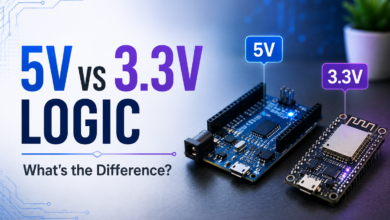
5V vs 3.3V Logic — What’s the Difference?
Mixing up 5V and 3.3V logic can silently damage your components. This beginner-friendly guide explains the difference between the two…
Read More » -
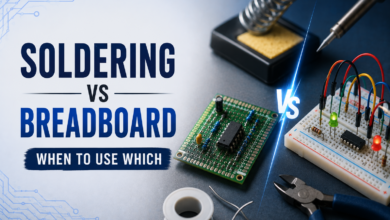
Soldering vs Breadboard — When to Use Which
Not sure when to solder a project versus keep it on a breadboard? This beginner-friendly guide breaks down the pros,…
Read More » -
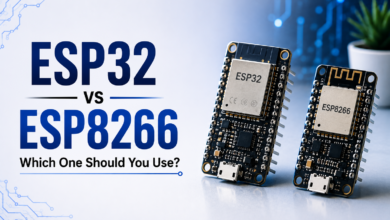
ESP32 vs ESP8266 — Which One Should You Use?
Not sure whether to pick an ESP32 or an ESP8266 for your next project? This beginner-friendly comparison breaks down the…
Read More » -
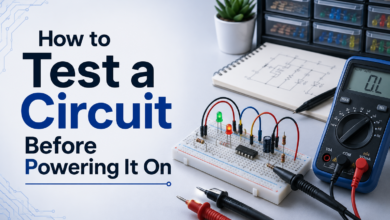
How to Test a Circuit Before Powering It On
Skipping a pre-power check is one of the fastest ways to damage a component. Learn simple beginner-friendly steps to test…
Read More » -
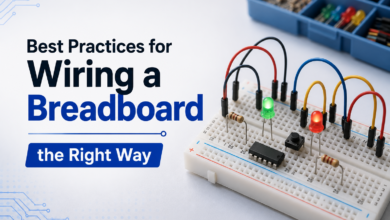
Best Practices for Wiring a Breadboard the Right Way
Messy breadboard wiring leads to confusing bugs. Learn beginner-friendly best practices for wiring a breadboard cleanly, safely, and in a…
Read More » -
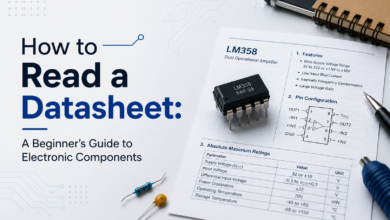
How to Read a Datasheet : A Beginner’s Guide to Electronic Components
Datasheets look intimidating, but they don’t have to be. This beginner-friendly guide breaks down exactly what to look for in…
Read More » -
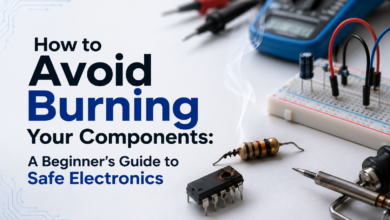
How to Avoid Burning Your Components: A Beginner’s Guide to Safe Electronics
Fried an LED or a chip before? Learn the most common reasons beginners burn out electronic components, and simple habits…
Read More » -
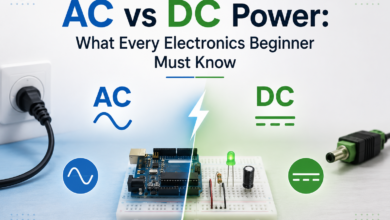
AC vs DC Power: What Every Electronics Beginner Must Know
Confused about AC and DC power? This beginner-friendly guide breaks down the difference between alternating and direct current, where each…
Read More » -
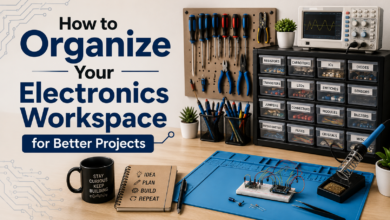
How to Organise Your Electronics Workspace for Better Projects
A cluttered workbench slows down every project. Learn practical tips to organise your electronics workspace — tools, components, and cables…
Read More » -
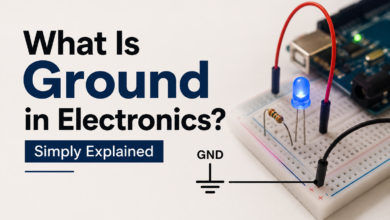
What Is Ground in Electronics? Simply Explained
If you’ve ever built a circuit, you’ve seen the label “GND” on almost every component — but what does ground…
Read More »